Water Leak Detection Cessnock
Water leak detection in Cessnock finds hidden leaks under slabs, inside walls and along buried service lines using listening gear, pressure testing and a pipe locator. The location is confirmed before any repair is priced. The full service list sits with your plumber in Cessnock, or ring (02) 4063 3475 and run through what you have noticed.
Licensed plumbers and gas fitters · NSW Lic. 359278C
Last updated September 2026
What Tells You Water Is Getting Out?
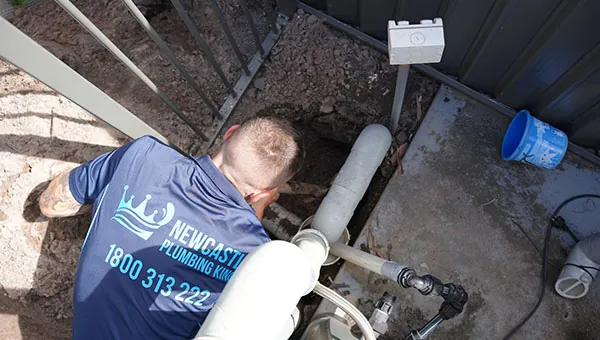
Hidden leaks announce themselves eventually, and catching them early is the whole game. The signs:
- A water bill that rises with no new appliances or visitors in the house
- A hot patch on a tiled floor, or hot water that runs out sooner than it used to
- A stain spreading on a wall or ceiling with no fixture above it
- A hiss or trickle sound with all the taps shut
- One green patch in the yard, or ground that stays soggy in dry weather
Two of those together earns a trace. One on its own still earns a phone call.
How Do We Find It Without Digging?
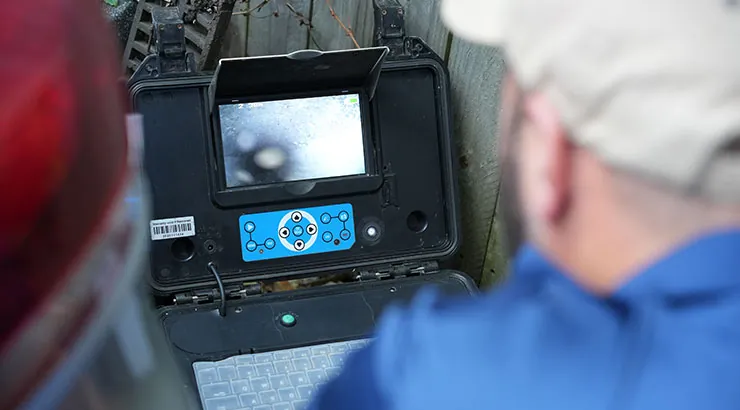
The trace runs in a set order, because guessing where to dig is the expensive way:
- 01
Listen first
The acoustic detector is run along the suspected line, from the meter to the fixtures, and the escape point shows as a change in the sound.
- 02
Prove it
Each section is isolated and pressure tested, so the failing stretch is proven rather than assumed.
- 03
Map the run
The pipe locator traces where the line actually sits, which in older yards can be well off the line you would guess.
- 04
Mark and quote
The spot is marked, the repair options are laid out, and no floor or wall is cut until you have approved a figure.
What Shapes the Cost of the Trace?
"Not only all of that but the job came in right on quote." Steve
Finding the leak is usually the smaller half of the job. The cost follows the pipe:
- Where the pipe sits, since a line reachable from beneath a raised floor is quicker to work on than one below a slab or paved driveway
- The length of pipe that needs isolating and testing before the failing section shows itself
- What the trace ends in, because a single joint repair and a full galvanised changeover are different jobs
- When you call, with after-hours traces carrying the after-hours rate
We provide up-front, honest quotes that will always match the final price, should you decide to go ahead. That matters most on leak work, where the alternative is agreeing to open a floor before anyone knows how long the repair runs.
Rusted Steel, Moving Clay, Hidden Water
Old galv, quiet failures
Ground that moves, hoses that hide
When the Trace Turns Up Someone Else's Job
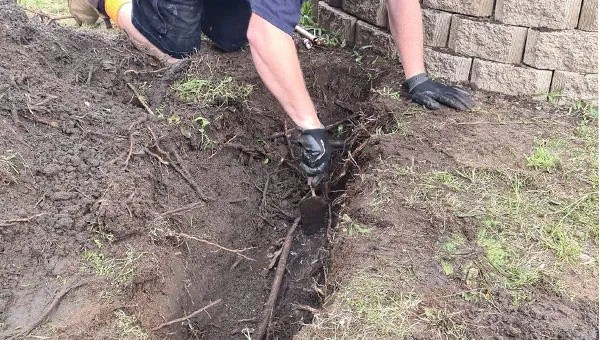
When we're not the right call: water getting past a failed shower membrane is a job for a waterproofer or builder, and the spot we mark tells them which wall or floor to open. A gas smell is a different call entirely, with its own steps under gas leak detection.
Where the Job Goes Next
A trace often answers a question you had not asked yet. Depending on what the equipment finds, the next step might be an emergency plumber for a line that is actively splitting, or a CCTV drain inspection where the wet ground turns out to come from a cracked drain, not the water service. Both are quoted the same way: figure first, approval before work.
Leak Trace Questions
How exact is a leak trace under a slab home?
The listening gear narrows the escape point to a small zone, the pressure test proves which section is failing, and the spot gets marked on the floor before anyone cuts anything. In slab homes around the mid-century tracts, that marking step is what keeps the repair to one opening instead of three.
Does finding the leak mean the floor has to come up?
Not always. Plenty of repairs reach the pipe through an existing opening or a single lifted panel, especially under raised weatherboards where the run is accessible from below. If the trace points under a slab, you see the spot marked and the quote for opening it before the work begins.
Can you fix the pipe on the same visit as the trace?
It depends on what the trace finds. A single split joint or a failed fitting can often be repaired on the spot. A galvanised run that is failing in more than one place is better scheduled as a changeover, and you get that quote first so the choice is yours.
Is a slow drip worth chasing straight away?
Yes. A slow leak keeps charging you on the water bill while it widens, and the same escape point that drips this month can split a wall cavity or a slab edge next month. A trace costs less than most repairs and far less than the damage an ignored leak does.
Need a plumber? Call or send the form
Call (02) 4063 3475 or send the form below. Available 24/7, you see a fixed figure ahead of any work, and every job carries our 365-day warranty on all work.
Request a callback
Leave a name and number and a plumber will ring you back.